
Migraines are more than just headaches. They are a complex neurological condition affecting over one billion people worldwide and remain one of the leading causes of disability. While medications play an important role in acute treatment, many people with migraine are looking for natural, science-backed ways to reduce attack frequency, intensity, and overall burden.
Before reaching for another painkiller, it is worth understanding that certain supplements have solid clinical evidence supporting their role in migraine prevention. When used correctly and consistently, they can become powerful allies in a long-term migraine management strategy.
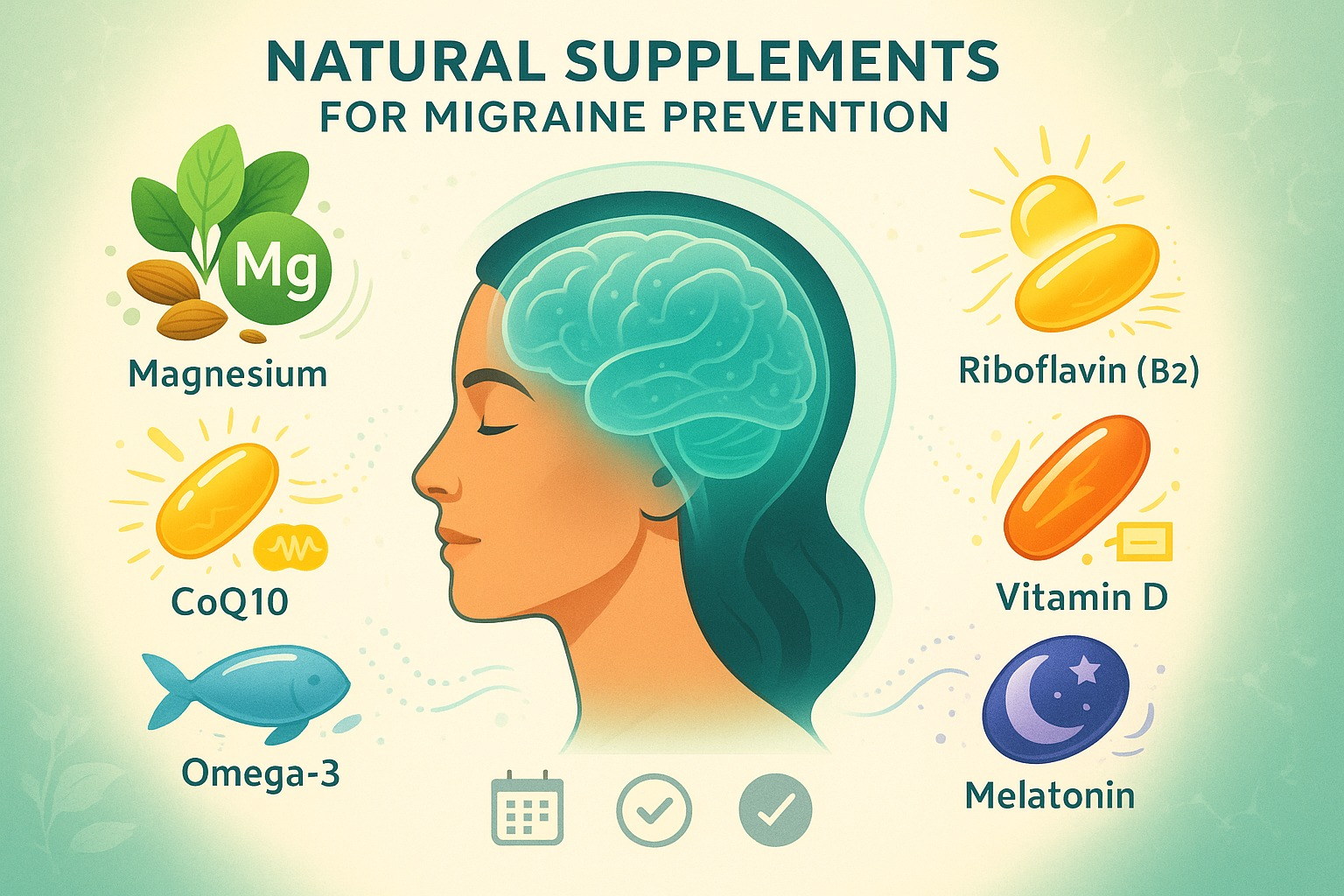
This article breaks down the most researched supplements for migraine prevention, explains how they work, and shows how tracking their effects properly can make a real difference.
Why Supplements Matter in Migraine Prevention
Migraine is closely linked to:
-
Neuronal hyperexcitability
-
Mitochondrial energy deficits
-
Neuroinflammation
-
Circadian rhythm disruption
-
Mineral and vitamin deficiencies
Supplements do not replace medical treatment, but they support the underlying biological processes involved in migraine, especially when deficiencies or lifestyle stressors are present.
Clinical guidelines from neurology associations increasingly recognize supplements as part of preventive migraine care when used responsibly.
Magnesium – The Migraine Mineral
Magnesium is one of the most studied supplements for migraine prevention.
Why it works
Magnesium helps:
-
Calm overexcited neurons
-
Reduce cortical spreading depression, the brain wave associated with migraine aura
-
Regulate neurotransmitters involved in pain signaling
Up to 50% of people with migraine are estimated to have magnesium deficiency, particularly those with menstrual migraine or aura.
What research shows
-
400–600 mg daily can reduce migraine frequency by up to 41%
-
Especially effective for migraine with aura
Best forms
-
Magnesium glycinate
-
Magnesium citrate
-
Magnesium threonate
Avoid magnesium oxide due to poor absorption.
Additional benefits
-
Improved sleep quality
-
Reduced muscle tension
-
Nervous system support
Riboflavin (Vitamin B2) – Mitochondrial Energy Support
The brain has one of the highest energy demands in the body. In migraine, energy metabolism is often impaired.
Why it works
Riboflavin supports mitochondrial ATP production, improving the brain’s ability to meet energy demands under stress.
What research shows
-
400 mg daily reduced migraine frequency by up to 50% after 3 months
-
Particularly useful for frequent episodic migraine
What to expect
-
Bright yellow urine is normal and harmless
Riboflavin is safe, inexpensive, and well tolerated for long-term use.
CoQ10 – The Mitochondrial Protector
Coenzyme Q10 plays a key role in cellular energy production and antioxidant defense.
Why it works
-
Enhances mitochondrial efficiency
-
Reduces oxidative stress in neurons
What research shows
-
100–300 mg daily reduced attack frequency by up to 48%
-
Especially helpful for people experiencing fatigue alongside migraine
Best absorption tips
-
Take with fatty food
-
Consider ubiquinol form for better bioavailability
Vitamin D – The Neuroimmune Modulator
Low vitamin D levels are frequently observed in people with chronic migraine.
Why it works
Vitamin D influences:
-
Inflammatory pathways
-
Serotonin synthesis
-
Nerve signaling and immune regulation
What research shows
-
Correcting deficiency can reduce migraine frequency by 25–40%
Practical guidance
-
Test blood levels first
-
Optimal range: 40–60 ng/mL
-
Typical dosing: 2000–5000 IU daily, adjusted individually
Omega-3 Fatty Acids – Inflammation Fighters
Omega-3 fatty acids help counteract neuroinflammation, a key driver of migraine attacks.
Why they work
-
Reduce inflammatory mediators
-
May lower CGRP levels, a peptide strongly linked to migraine pain
What research shows
-
High-dose omega-3s reduced headache hours by 30–40%
Recommended dose
-
1500–2000 mg EPA + DHA daily
Best sources
-
High-quality fish oil
-
Algae-based supplements for plant-based diets
Melatonin – The Rhythm Regulator
Melatonin is not only a sleep hormone but also an antioxidant and anti-inflammatory agent.
Why it works
-
Regulates circadian rhythm
-
Improves sleep quality
-
Modulates pain processing
What research shows
-
3 mg at bedtime was as effective as amitriptyline for migraine prevention in clinical trials
Best for
-
Migraine with sleep disturbance
-
Shift work or irregular schedules
How to start
-
Begin with 0.5–1 mg, increase gradually if needed
Important Notes Before Starting Supplements
-
Allow 2–3 months to evaluate full preventive effects
-
Quality matters – choose third-party tested supplements
-
Always consult your healthcare provider, especially if you take medications
-
Supplements work best alongside lifestyle optimization: sleep, hydration, stress, nutrition
-
Supplements support migraine management – they do not replace medical care
Why Tracking Supplements Matters More Than Taking Them
Many people try supplements but stop too early or fail to see benefits simply because they do not track:
-
Dosage consistency
-
Time to effect
-
Interaction with triggers like sleep, stress, hormones, or weather
This is where structured tracking becomes essential.
Connecting supplement intake with migraine frequency, intensity, and duration allows you to understand what actually works for your body, rather than guessing.
You can also discuss results more clearly with your neurologist using real data instead of memory.
You Are Not Alone – Join the Migraine Community
Living with migraine can be isolating. Sharing experiences, learning from others, and feeling understood matters.
Midway through your migraine journey, consider joining a supportive community of people who track, learn, and manage migraine together:
👉 Join the Facebook community:
https://www.facebook.com/groups/stop.migraine.community
How Hope & Mo Helps Turn Supplements Into Results
Reading about supplements is only the first step. Applying them consistently and understanding their impact is where real prevention begins.
Hope & Mo is designed to help people with migraine:
-
Log supplements, medications, symptoms, and triggers in one place
-
Detect patterns between nutrition, sleep, stress, and migraine attacks
-
Avoid medication overuse and track long-term trends
-
Build sustainable migraine prevention routines
Instead of wondering whether magnesium or riboflavin is helping, you can see the data clearly over weeks and months.
Learn more about the app and how it supports science-based migraine management here:
👉 https://hopeandmo.com
Summary – What to Remember
-
Migraine prevention is possible with evidence-based supplements
-
Magnesium, riboflavin, CoQ10, vitamin D, omega-3s, and melatonin have strong clinical support
-
Supplements require consistency and time to work
-
Tracking is critical to understanding what truly helps your migraine
-
Combining supplements, lifestyle changes, and smart tracking leads to better outcomes
Migraine management is not about fighting your body. It is about understanding it, supporting it, and making informed decisions based on real data.
And that is exactly where the right tools make all the difference.