Learn how Hope lives with her Migraine Monster and keeps him calm day by day.
Track your headaches, symptoms, meds, and triggers to help Mo stay small and peaceful.
Headache Frequency
Track migraine frequency over time - and connect with others in the community chat.
Migraine Disability (MIDAS)
Based on MIDAS principles, Hope & Mo shows how migraine limits work,
daily tasks, and social life.
Medications
Log medications, avoid overuse, and share clear reports with your doctor.
Triggers & Patterns
Sleep, stress, weather, hormones, and food all play a role. Tracking them helps you notice what makes things worse - and what helps keep migraine calm.
HOW IT WORKS
Meet Mo - Your Migraine, Reimagined
Mo is not your enemy.
Mo is the migraine.
You are not.
Hope & Mo helps you manage migraine in a simpler, calmer way.
Instead of fighting pain, you learn to notice patterns and respond earlier.
Track headaches, symptoms, triggers, and medications.
Mo reflects what’s happening and reacts to your daily care.
Over time, migraine becomes more predictable and easier to manage.
This short video shows how Hope & Mo works in real life -
clearly, gently, and without pressure.
Features
Check OurFeatures
Hope & Mo - Migraine & Medication Tracker
Hope & Mo is a science-based migraine and medication tracker that helps you understand your attacks, manage treatment safely, and regain daily control.
Track migraines, symptoms, triggers, and medications in one place
Designed for kids, teens, and adults living with migraine
Built with privacy-first, on-device data storage
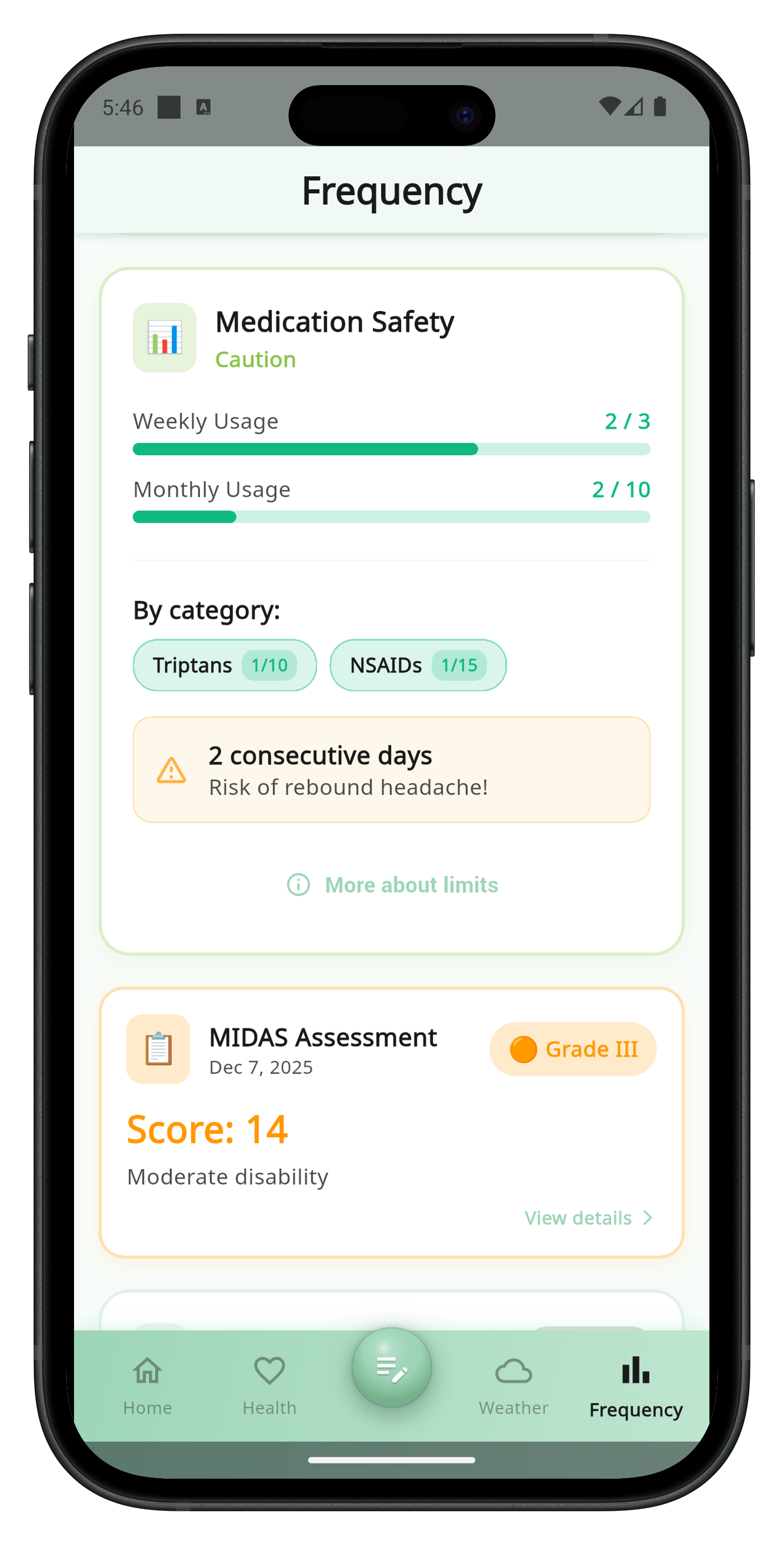
Medication Safety & Therapy Insights
Medication tracking is at the heart of Hope & Mo. The app helps you stay within safe limits and understand how treatments affect your migraine.
See safe medication limits and overuse warnings (MOH prevention)
Log doses, effects, and side reactions
Understand which medications actually reduce your pain over time
Smart Migraine Patterns & Risk Factors
Hope & Mo turns your daily logs into clear patterns that help reduce attack frequency.
Monthly migraine stats with intensity and trends
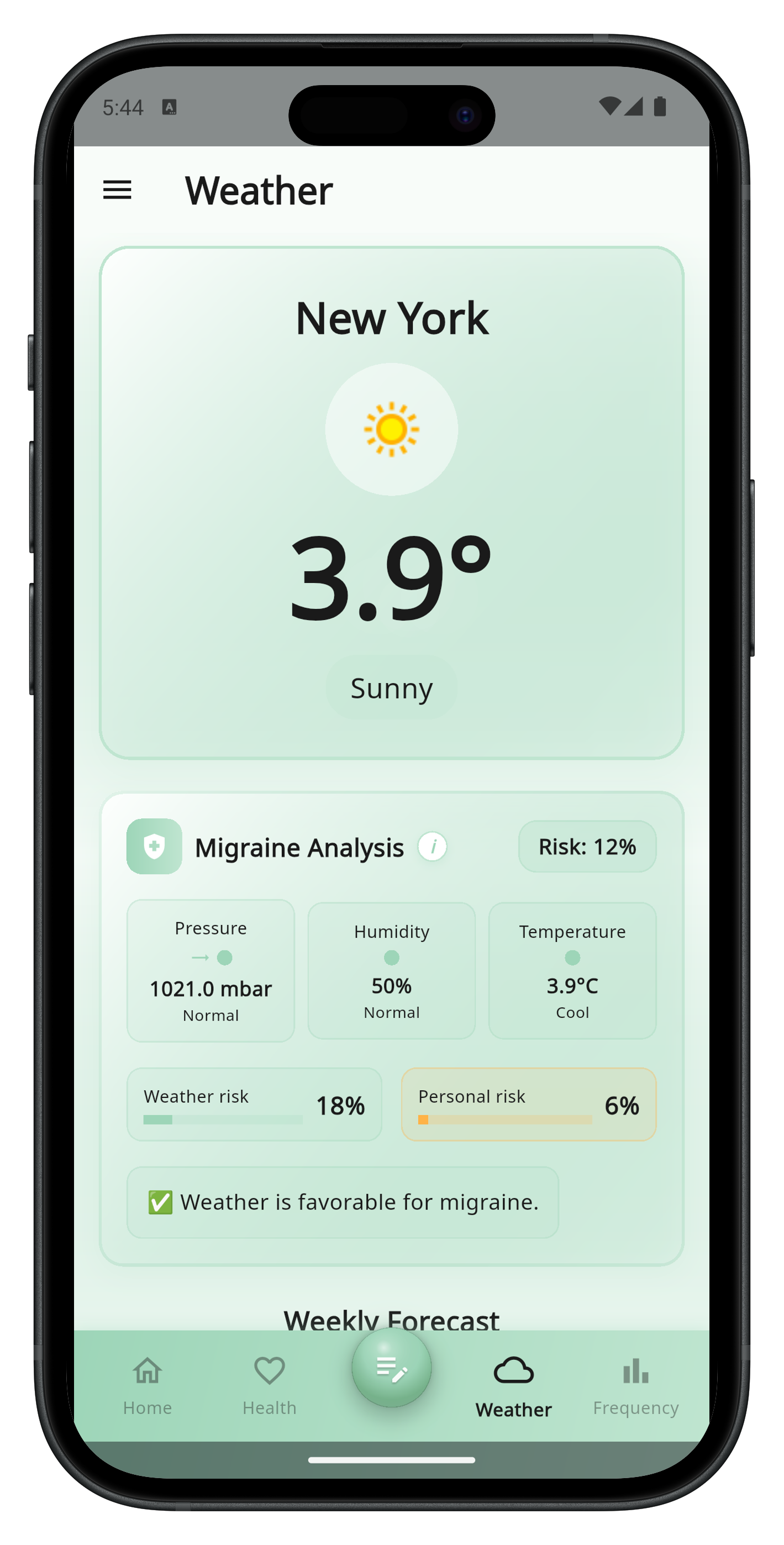
Links attacks with sleep, stress, weather, hormones, and cycle phases
Helps you spot early warning signs before a migraine escalates.
Migraine Journal, Food Log & Support Chat
Migraine is more than pain - it affects mood, food, routine, and isolation. Hope & Mo brings everything together.
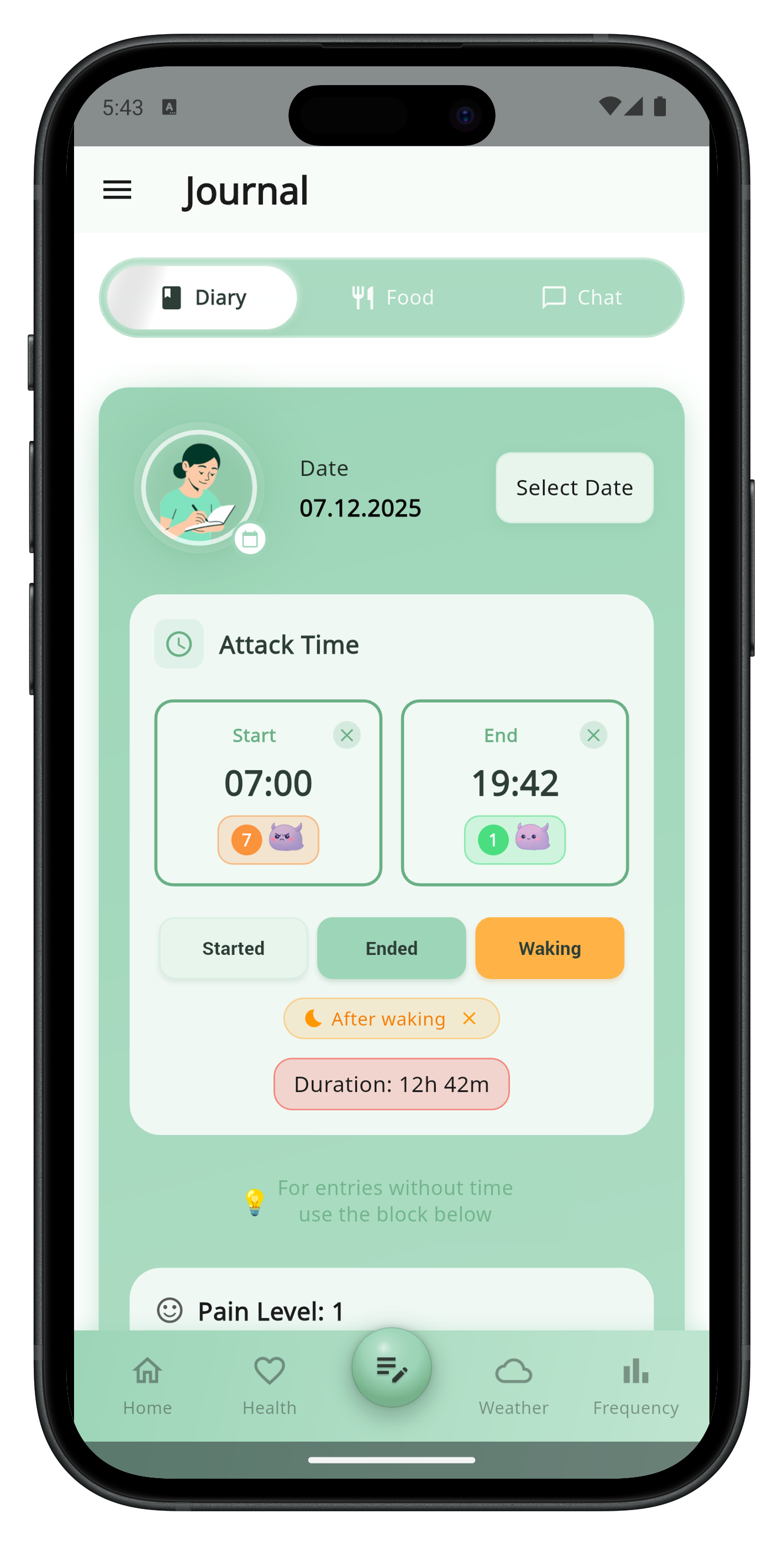
Migraine diary, symptom tracking, and food log
Gentle in-app chat with others who understand migraine
A safe space for support, motivation, and shared experience.
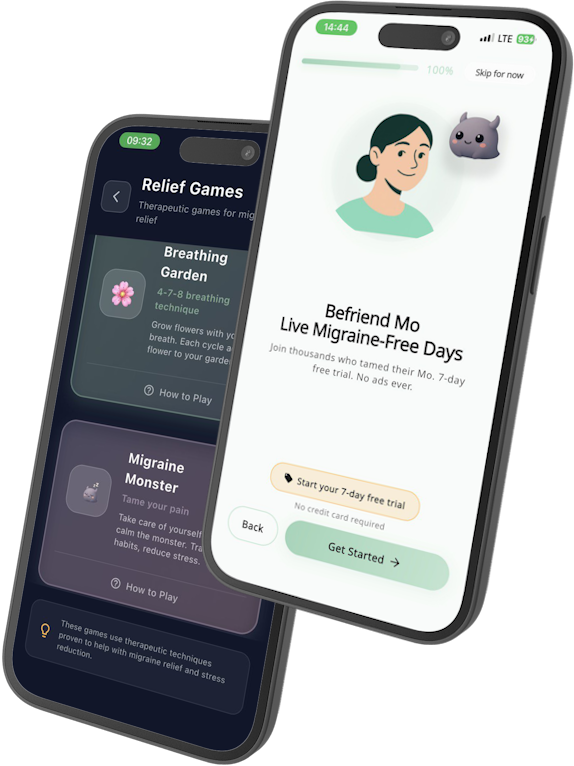
Calm Mo - Therapeutic Games for Real Relief
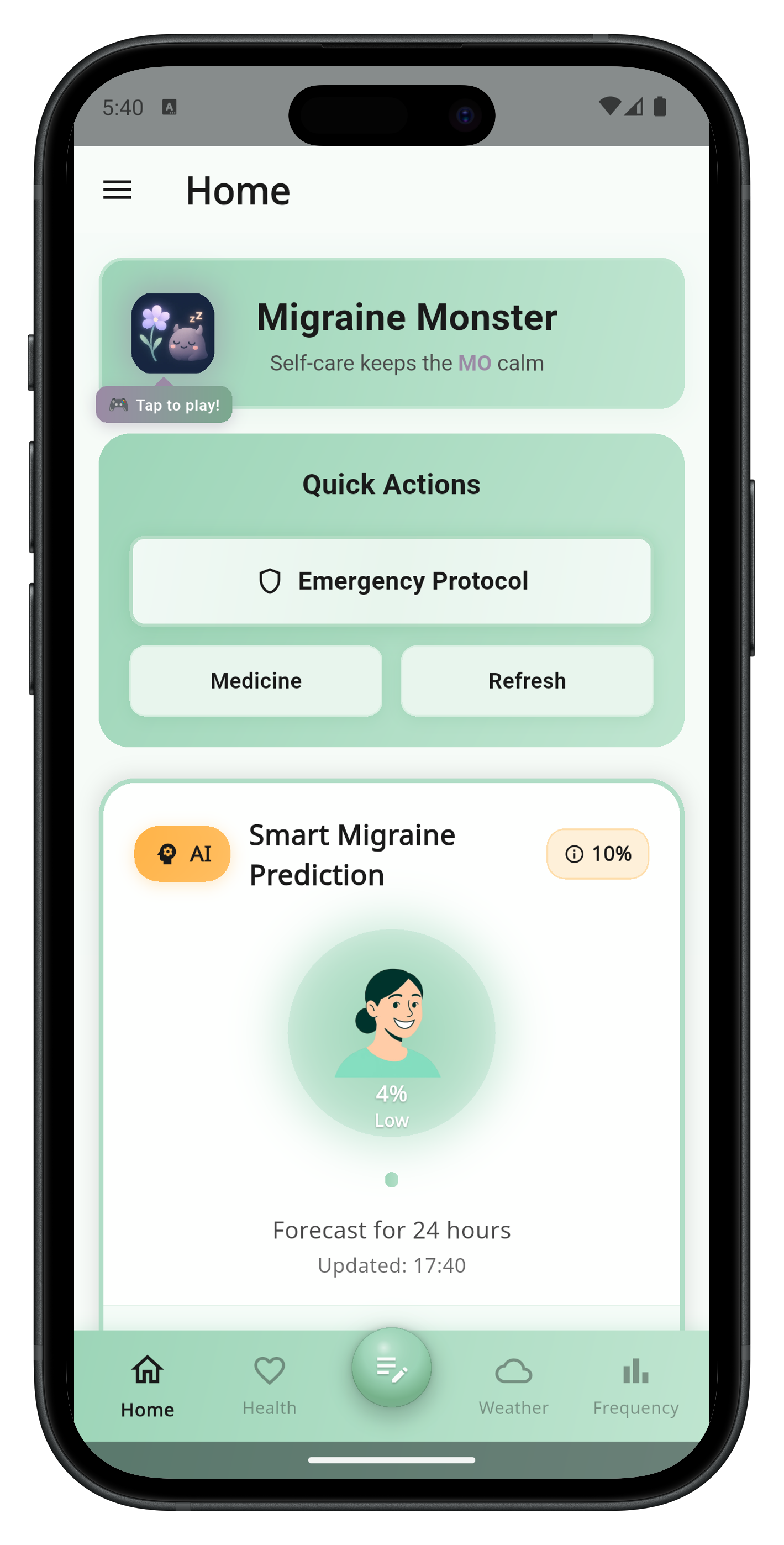
Mo is not a game character - he reflects your migraine state and helps you relax during attacks.
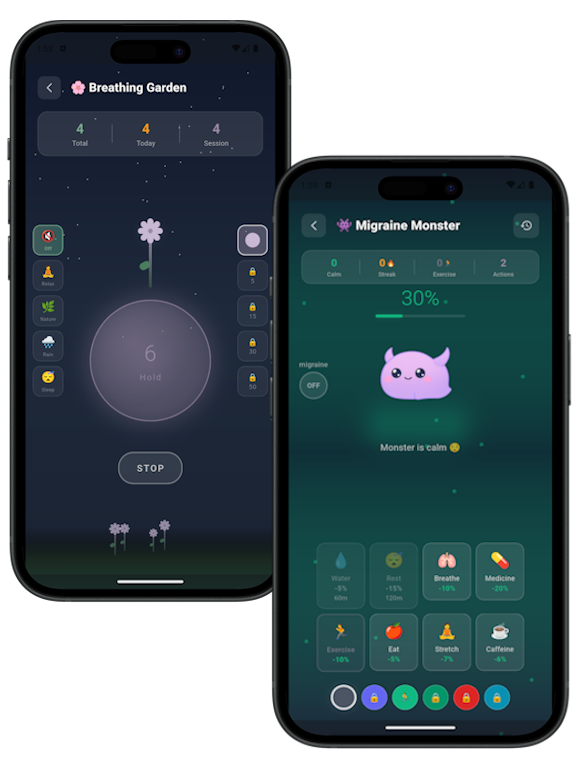
Calm Mo through simple self-care actions that lower migraine intensity
Breathing Garden with the 4-7-8 technique to ease tension naturally
Designed for low light, low effort, and use while lying down.
% Prediction accuracy
Health monitoring
% Science-based
FAQ
Frequently AskedQuestions
How does the Hope & Mo app help prevent migraine attacks?
Hope & Mo turns your daily logs into helpful insights.
As you track headaches, symptoms, sleep, stress, and triggers, Mo learns your patterns — and the app shows when your risk starts rising.
This gives you time to take action early: rest, hydrate, take medication, or avoid known triggers before an attack escalates.
Do I need to keep a migraine diary manually?
No - Hope & Mo makes tracking as easy as possible.
Just log your pain, symptoms, meds, and habits with a few taps.
The app organizes everything automatically, connects the dots, and helps you understand what truly affects your migraine.
Is there a community where I can talk to others with migraine?
Yes - Hope & Mo includes a gentle, supportive in-app chat where people with migraine share their experiences and encourage each other. You’re not alone in your pain; many others are walking the same path, and together it becomes easier to cope, learn, and heal.
How does Hope & Mo support medication management?
Mo keeps you safe and consistent with your treatment.
You get gentle reminders, clear dose logs, and warnings about possible overuse.
Over time, the app shows which medications help you most and how they influence your pain — so you and your doctor can make more confident decisions.
Hi, my name is Yurii. I’m the founder of Hope & Mo.
Over the years, I’ve worked closely with people living with migraine and teams building health-focused products.
Again and again, I saw the same issue: migraine is managed as isolated attacks, not as a daily condition that affects real life.
Most migraine apps stop at basic tracking.
Hope & Mo was created to help people understand patterns, manage medications safely,
and feel more supported between doctor visits.
This is a migraine and medication tracker designed for everyday use - not just for clinical reports.
We are building Hope & Mo as a science-based migraine app that combines clear data, calm interaction,
and tools that help respond earlier instead of reacting too late.
No pressure. No fear-driven alerts. Just practical support that fits real life.
My role as a founder is to make sure Hope & Mo stays useful, respectful, and human.
The goal is simple: a migraine tracker people trust and actually want to open every day.
The Science Behind Hope & Mo
How Narrative TherapyHelps Manage Migraines
Most migraine apps are digital diaries - you log your pain, track triggers, and look at charts.
Hope & Mo takes a fundamentally different approach, one rooted in narrative therapy, a scientifically validated psychotherapeutic method developed in the 1980s by Michael White and David Epston.
Why Hope & Mo Is Different
We didn't set out to build a therapy app. As someone who has lived with migraines for 26 years,
the creator of Hope & Mo intuitively designed what felt right - and it turned out to align with
decades of clinical research on how people best cope with chronic conditions.
What Is Narrative Therapy?
Narrative therapy is a form of psychotherapy that helps people separate themselves from their problems.
Instead of seeing yourself as "a migraine sufferer" or "someone broken by chronic pain," you learn to view
the problem as something external - something you can interact with, understand, and ultimately live alongside.
"The problem is the problem. The person is not the problem." - Michael White, co-founder of narrative therapy
This approach has been extensively studied and shown to be effective for chronic pain, depression, anxiety,
and other long-term conditions.
1. Externalization: Mo as Your Migraine
The Technique: In narrative therapy, externalization means giving a problem a name and treating it as separate from your identity.
How We Use It: Mo (short for Migraine Monster) is the externalized representation of your migraine condition. Mo is not you. Mo is something you live with, care for, and learn to understand.
Why It Works: Research shows that externalization reduces self-blame and shame while increasing a person's sense of control. A 2020 study on chronic pain patients found that narrative therapy helped participants "deconstruct their problem-saturated stories" and "unearth their inner strengths" (Chow & Fok, 2020).
2. Companionization: Mo as Friend, Not Enemy
The Technique: Traditional approaches often frame health problems as enemies to defeat ("Fight your migraine!", "Beat the pain!"). Modern narrative therapy suggests a different path - developing a relationship with your condition rather than waging war against it.
How We Use It: Mo is not a villain. When you take care of yourself, Mo calms down. When you're struggling, Mo struggles too. During a migraine attack, Mo sleeps beside you - not attacking, but suffering alongside you. You're companions, not adversaries.
Why It Works: The book "Playful Approaches to Serious Problems" by Epston, Freeman & Lobovits (1997) emphasizes moving away from aggressive "power over" metaphors toward "power in relation to the problem." This shift reduces the psychological burden of fighting an unwinnable war and promotes acceptance and adaptation.
3. Agency and Self-Efficacy: You Make a Difference
The Technique: A key goal of narrative therapy is restoring a person's sense of agency - the belief that your actions matter and can influence outcomes.
How We Use It: Every action you take in Hope & Mo has a visible effect. Drink water - Mo calms down. Rest - Mo relaxes. Exercise - Mo shrinks. You see the direct connection between self-care and your condition. This isn't just gamification; it's a visual representation of your agency.
Why It Works: A randomized controlled trial found that chronic pain patients who received narrative therapy showed "significantly improvements across various outcome measures, including mastery, hope" and reported "lower depressive symptoms after treatment" (Chow, 2018).
4. Sparkling Moments: Celebrating Your Wins
The Technique: Narrative therapists actively look for "sparkling moments" or "unique outcomes" - times when a person acted contrary to their problem story.
How We Use It: Our streak system tracks your "calm days" - days when Mo stayed peaceful. These aren't just statistics; they're evidence that you can manage your condition. Each streak is a sparkling moment, proof that the problem doesn't always win.
5. Support During Crisis: Mo Cares When You're Hurting
The Technique: Narrative therapy emphasizes that the relationship between person and problem changes in different contexts. During acute suffering, the approach shifts from active management to compassionate presence.
How We Use It: When you activate migraine mode, Mo doesn't demand anything from you. Mo sleeps beside you, sends gentle reminders to stay hydrated, and asks how you're feeling. The app becomes a source of comfort, not pressure.
What This Means for You
When you use Hope & Mo, you're not just tracking migraines. You're:
Externalizing your condition as Mo, reducing self-blame
Building a relationship with your migraine instead of fighting a losing war
Seeing your agency - your actions directly affect Mo's state
Collecting sparkling moments - proof that you can manage this
Receiving support during attacks without pressure or judgment
This isn't just a prettier version of a migraine diary. It's a therapeutic tool built on 40+ years of
clinical research into how people best cope with chronic conditions.