
Migraine Is Not Who You Are: How Narrative Therapy Changes the Way We Live With Chronic Pain
Most migraine articles start with triggers, medications, or statistics.
This one starts somewhere else – with identity.
Because for many people, migraine slowly stops being just a condition and becomes a label.
“I am a migraine sufferer.”
“My body is broken.”
“I can’t plan anything.”
This shift happens quietly. Over years of canceled plans, misunderstood pain, and constant vigilance. And once migraine becomes part of who you think you are, managing it becomes much harder than it needs to be.
This is exactly where narrative therapy offers a radically different perspective.
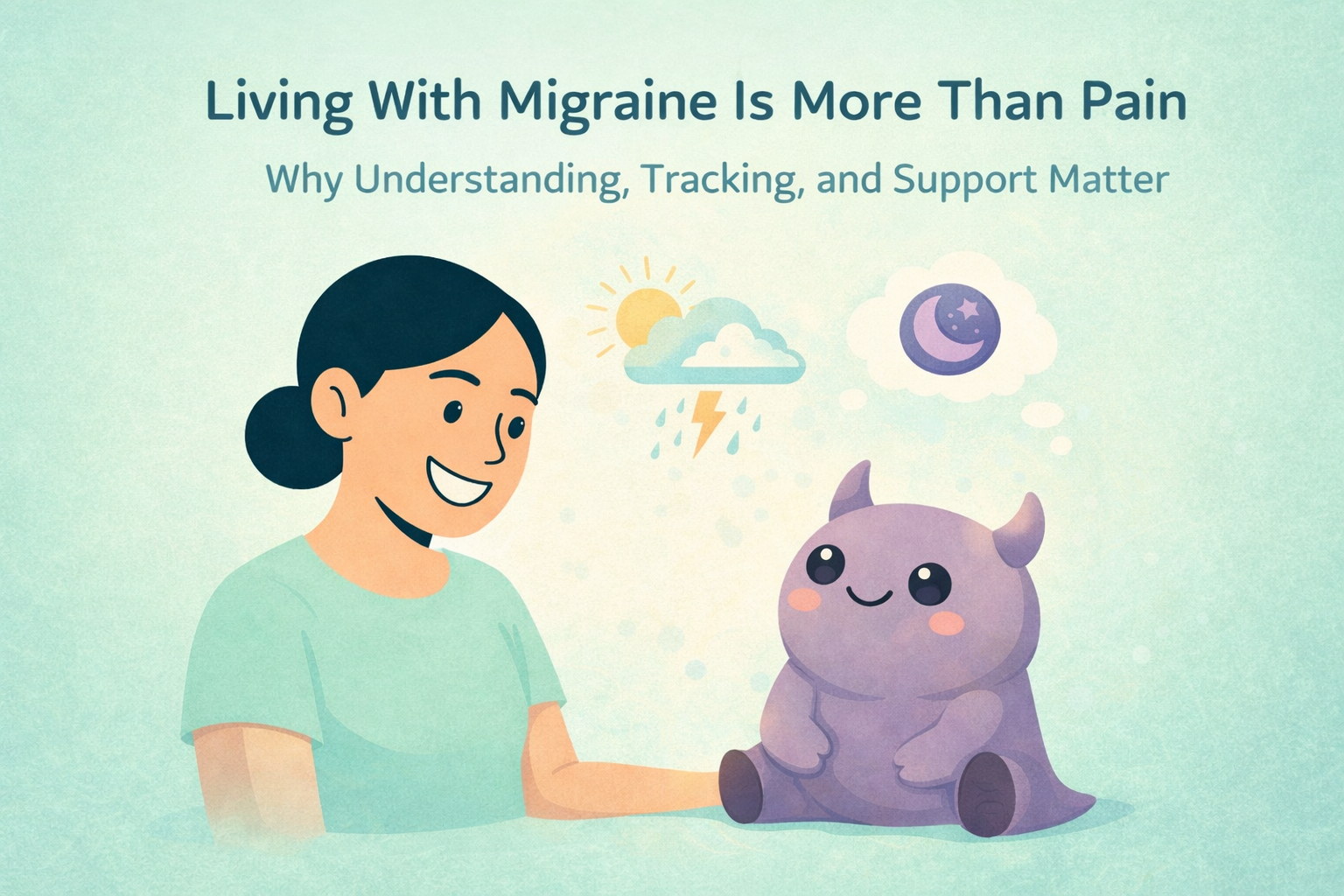
The Core Idea of Narrative Therapy (And Why It Matters for Migraine)
Narrative therapy is a well-established psychotherapeutic approach developed by Michael White and David Epston. Its central idea is deceptively simple:
“The problem is the problem. The person is not the problem.”
In practical terms, this means separating a person from their condition.
You are not your migraine.
Migraine is something that happens to you, not something that defines you.
For people living with chronic pain, this distinction is life-changing.
Migraine often comes with shame, self-blame, and internalized guilt. You start questioning your resilience, your productivity, your reliability. Narrative therapy gently dismantles this internal dialogue and replaces it with something healthier: curiosity instead of judgment.
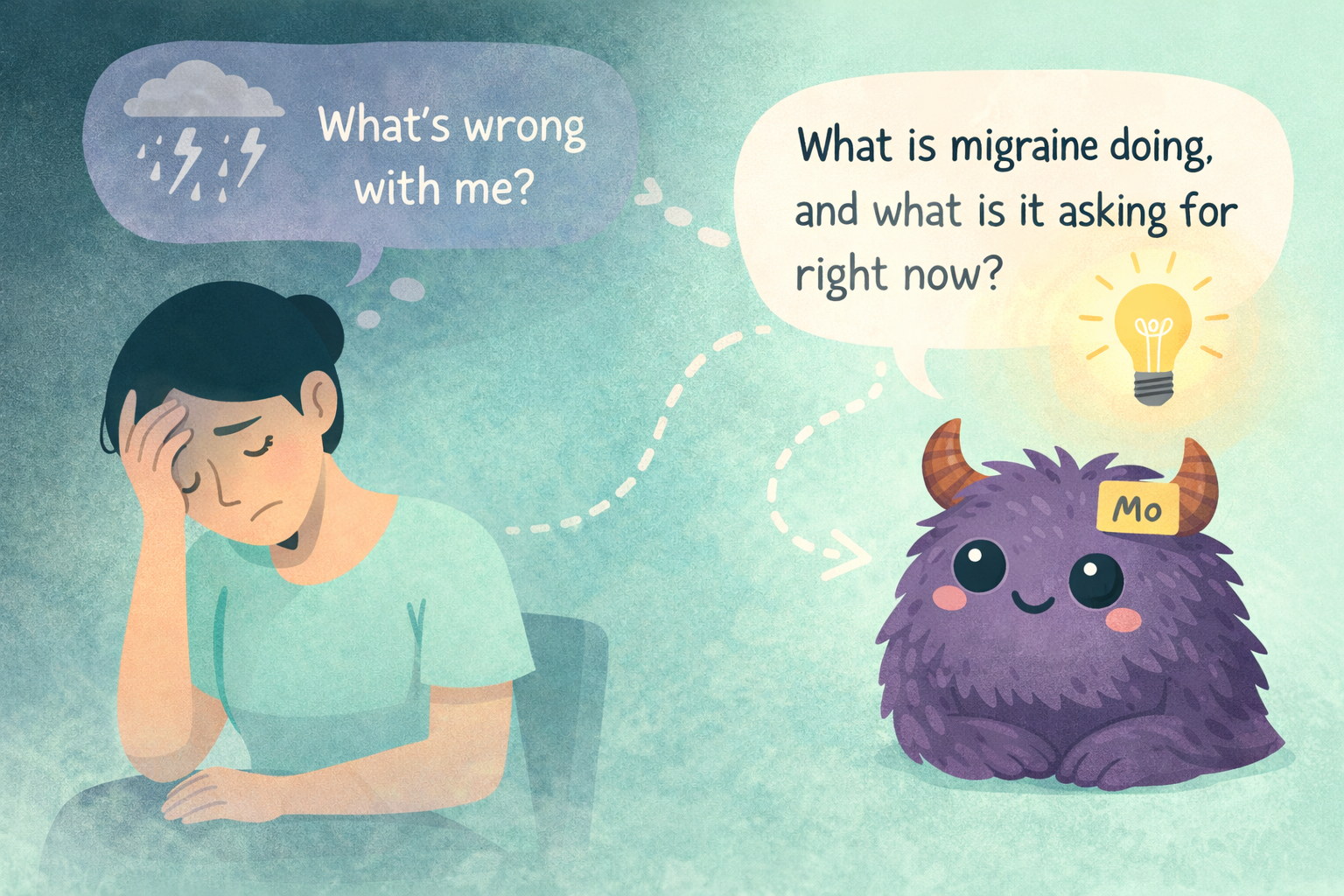
Instead of asking “What’s wrong with me?”, the question becomes:
“What is migraine doing, and what is it asking for right now?”
Externalizing Migraine: Why Naming the Problem Changes Everything
One of the most powerful techniques in narrative therapy is externalization.
Rather than merging identity and illness, the problem is given its own space. Therapists have used metaphors like “the black dog” for depression or “the worry monster” for anxiety. The goal is not childishness – it is psychological distance.
Distance creates control.
When migraine is externalized, people stop fighting themselves. They stop seeing pain as personal failure. Migraine becomes something observable, something that reacts to context, something that can be influenced.
This is where the idea behind Mo – the Migraine Monster was born.
Mo is not an enemy.
Mo is not evil.
Mo is a reflection.
When sleep is skipped, stress piles up, hydration is forgotten, or medication is overused – Mo becomes restless. Not as punishment, but as a signal. When care is given, Mo calms down.
This mirrors exactly how narrative therapists work with chronic conditions in clinical settings. The difference is that now, this relationship exists outside the therapist’s office, in daily life.
From Fighting Migraine to Relating to It
Traditional language around illness is aggressive:
“Fight migraine.”
“Beat the pain.”
“Win the battle.”
Narrative therapy questions whether this constant war metaphor is actually helpful – especially for conditions that cannot simply be defeated.
Living in a permanent fight mode is exhausting. And when the “enemy” is inside your own nervous system, the cost is even higher.
A narrative-based approach suggests something else: relationship instead of war.
Migraine is not something to surrender to. But it is something to listen to.
It responds to patterns. To routines. To stress. To care.
Once this relationship changes, people often report a subtle but important shift: less fear between attacks, less panic at early symptoms, more confidence in their own agency.
Why Tracking Becomes Therapeutic, Not Obsessive
Many people associate tracking with control or anxiety. And poorly designed migraine diaries often reinforce that feeling.
Narrative therapy reframes tracking as story-building.
Each logged headache, each medication entry, each calm day becomes part of a larger narrative. Not a story of failure, but a story of interaction: when I do this, migraine responds like that.
Over time, patterns emerge not as cold data, but as understanding.
This is why in Hope & Mo, tracking is not presented as medical surveillance. It is presented as observation without judgment. A way to see how Mo behaves under different conditions, and how small actions influence outcomes.
That awareness alone often reduces helplessness – one of the strongest psychological amplifiers of chronic pain.
Medication, Guilt, and Compassion
Medication overuse headache is one of the clearest examples of how shame-based approaches fail migraine patients.
People don’t overuse medication because they are careless.
They do it because they are in pain and trying to function.
Narrative therapy replaces guilt with clarity.
Instead of “I took too much again”, the narrative becomes:
“Migraine has been louder lately. What changed?”
By externalizing the condition, medication tracking stops feeling like self-policing and starts feeling like self-protection. The goal is not restriction, but understanding safe limits and long-term consequences without fear.
Community as a Shared Narrative
Narrative healing rarely happens in isolation. Stories become stronger when they are witnessed.
One of the most powerful moments for people living with migraine is realizing:
“It’s not just me.”
Shared experience reduces isolation. It softens self-blame. It brings clarity to patterns that once felt random.
That is why community inside Hope & Mo is not an optional feature – it is part of the therapeutic design.
Instead of directing you to an external group, we built connection directly into the app.
Inside Hope & Mo, you can access a regional chat space where users share:
- migraine patterns
- triggers and recovery strategies
- medication experiences
- emotional reflections
It’s a place where migraine stories are understood – not minimized.
If you are using the app, open the Community section and join the conversation in your region.
If you haven’t downloaded Hope & Mo yet, you can join here:
📲 App Store: https://apps.apple.com/ua/app/stop-migraine-track-predict/id6748270225?l=en&platform=iphone
📲 Google Play: https://play.google.com/store/apps/details?id=site.stopmigraine.app
Connection is not an add-on. It is part of healing.
Why Hope & Mo Is Built on Narrative Therapy (Even If It Doesn’t Say It Loudly)

Hope & Mo was not created as a “therapy app”.
It was created as something its creators wished they had during years of living with migraine.
Only later did it become clear that its core principles align closely with narrative therapy:
- Migraine is externalized, not personalized
- Agency is restored through visible cause-and-effect
- Compassion replaces pressure during attacks
- Calm days are treated as meaningful victories
- The story is about living with migraine, not being consumed by it
If you are curious how this approach feels in practice, you can explore the app here:
👉 https://hopeandmo.com
Not to fix you.
But to support a healthier story around migraine.
Final Thoughts: Rewriting the Migraine Story
Migraine does not define who you are.
But the story you tell yourself about migraine shapes how heavy it feels.
Narrative therapy teaches that stories are not fixed. They evolve. And when the story changes, behavior, emotions, and even physical experience often follow.
You are not broken.
You are not weak.
You are a person living with a complex neurological condition.
And that story deserves compassion, clarity, and support.