What Aspartame and MSG Really Do to the Migraine Brain
For many people living with migraine, the search for triggers becomes almost obsessive. Weather changes, sleep patterns, stress, hormones — all of these are well-known suspects. But food often feels more confusing. One day everything seems fine, and the next day a migraine appears out of nowhere.
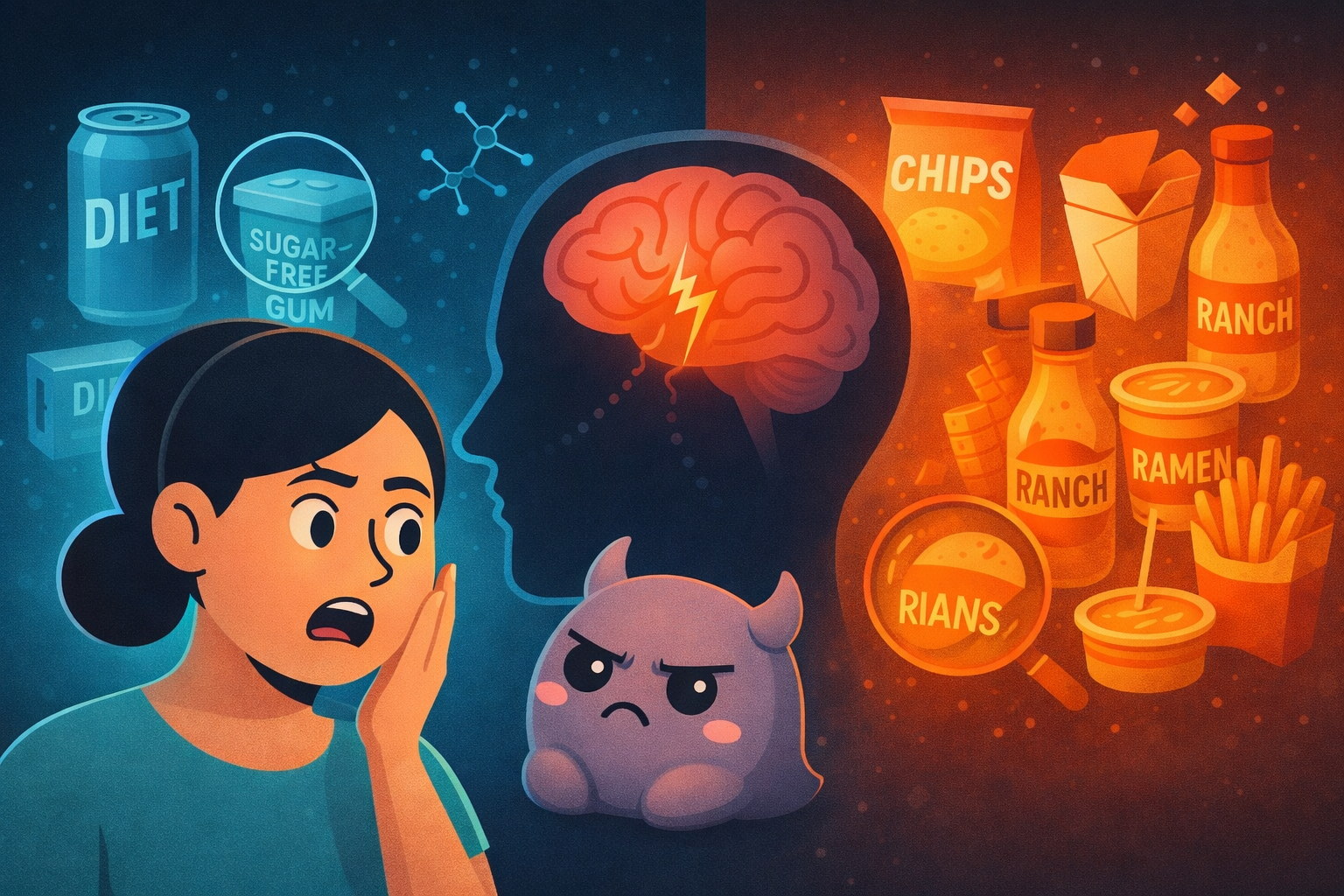
What many patients don’t realize is that the problem is not always what you eat, but what’s hidden inside everyday foods. In the modern American diet, two additives appear again and again in migraine research and patient reports: aspartame and monosodium glutamate (MSG).
They are not universal triggers. They are not “toxic” for everyone. But for a subset of people with migraine, they can quietly push the brain toward an attack — especially when exposure is frequent and untracked.
Why Migraine Triggers Are So Individual
Migraine is not an allergy. It’s a neurological sensitivity disorder. That means reactions are threshold-based, not binary.
You can tolerate a substance for weeks, even months, until the brain crosses a certain excitability threshold. Then suddenly, something that “never bothered you before” starts triggering attacks.
This is exactly why food-related migraine triggers are so hard to identify without tracking. Aspartame and MSG don’t always cause immediate pain. Sometimes they act as background stressors, lowering the brain’s resilience over time.
Aspartame: Sweet Taste, Unclear Neurological Effects
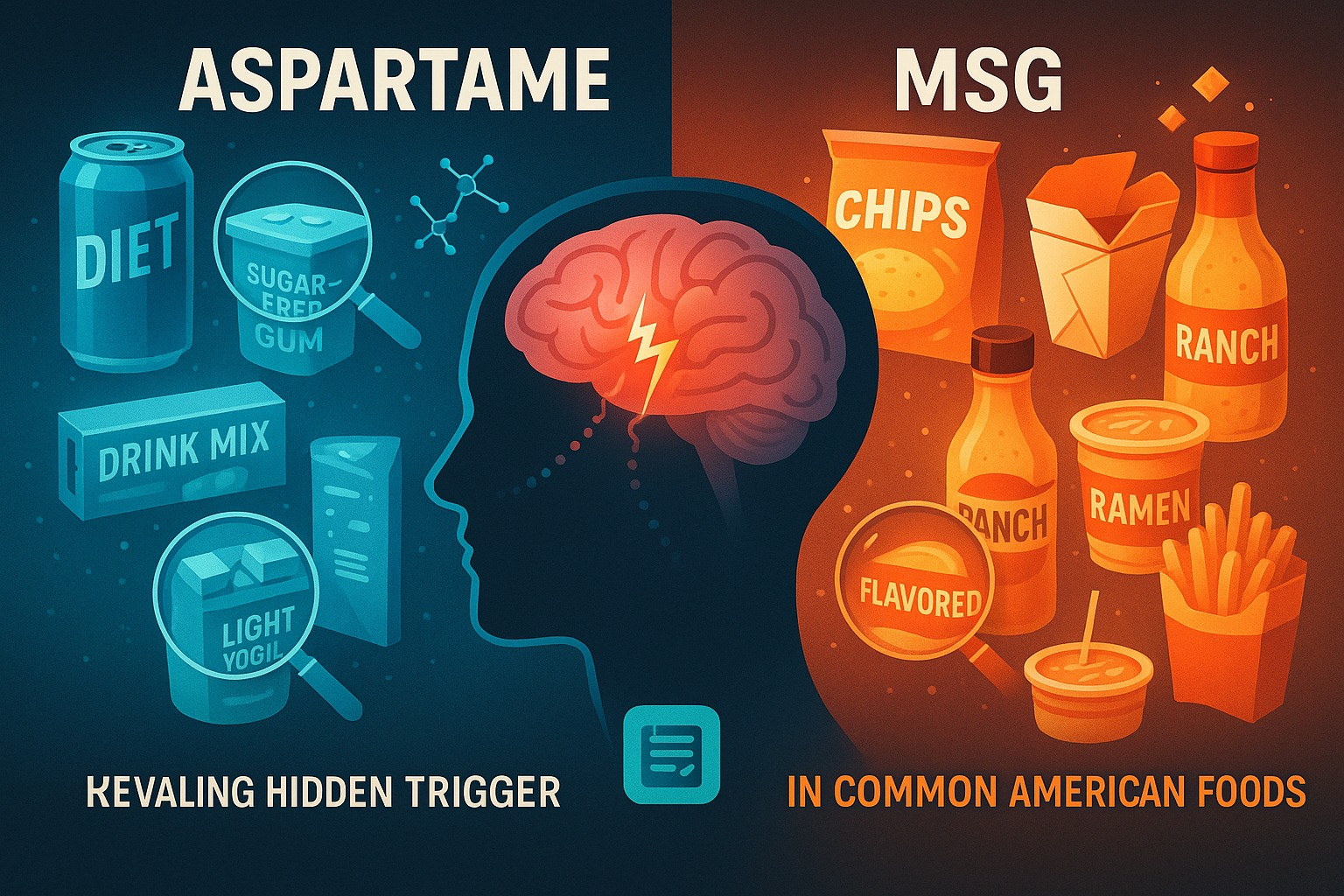
Aspartame is an artificial sweetener commonly used in “diet” and “sugar-free” products. Once consumed, it breaks down into phenylalanine, aspartic acid, and methanol — substances that can influence neurotransmitter balance in the brain.
Some studies suggest these metabolites may affect serotonin and dopamine pathways, which are already known to play a role in migraine. Other studies show no clear population-wide effect. The conclusion is consistent across the literature: sensitivity is highly individual.
For migraine patients, that distinction matters more than statistical averages.
Aspartame hides in places many people don’t associate with “sweets” at all. Diet sodas like Diet Coke, Coke Zero, and Diet Pepsi are the obvious sources. But it’s also common in sugar-free chewing gum, light yogurts, powdered drink mixes, sugar-free desserts, and even “no sugar added” ice cream.
Because these products are often consumed daily, exposure can become chronic without being noticed.
MSG: Flavor Enhancement and Neural Excitability
Monosodium glutamate is a flavor enhancer designed to intensify savory taste. Glutamate itself is an excitatory neurotransmitter. In sensitive individuals, excess stimulation of glutamate receptors may increase neuronal firing and affect blood vessel regulation.
In migraine patients who react to MSG, headaches can appear 15 to 30 minutes after consumption. Others notice no immediate reaction at all — which is why MSG remains controversial and poorly understood outside clinical contexts.
MSG is especially common in ultra-processed foods: Chinese takeout, fast food, flavored chips, seasoning blends, instant noodles, frozen meals, canned soups, and sauces. It is also frequently hidden under alternative names like yeast extract, hydrolyzed protein, autolyzed yeast, or even natural flavors.
The challenge is not avoiding MSG completely — it’s recognizing patterns of exposure.
The Real Problem: Invisible Accumulation
Most migraine sufferers don’t react to one soda or one meal. Problems arise when triggers stack:
-
poor sleep
-
stress
-
dehydration
-
hormonal shifts
-
repeated exposure to additives
Food additives often become the final piece in a much larger puzzle.
This is why simply “cutting out foods” rarely works long-term. Without context, it becomes restrictive, frustrating, and unsustainable.
What does work is understanding when and how often certain substances appear in your life — and how your brain responds over time.
This is exactly where structured migraine tracking becomes critical. Tools like Hope & Mo are designed to help patients connect food intake, medication use, sleep patterns, and symptoms into one coherent picture, instead of relying on memory or guesswork. Seeing patterns clearly often changes behavior naturally, without strict rules or fear-based avoidance.
You can explore how this works in practice at
👉 https://hopeandmo.com
Migraine Is Not About Perfection – It’s About Awareness
Not everyone needs to eliminate aspartame or MSG. Many people tolerate them perfectly well. But if migraines feel unpredictable, frequent, or increasingly resistant to treatment, hidden dietary triggers are worth investigating.
The goal is not to blame food. The goal is to reduce uncertainty.
When you understand your personal thresholds, migraine stops feeling random — and starts feeling manageable.
Summary: What to Remember
-
Aspartame and MSG are not universal migraine triggers, but can affect sensitive individuals
-
Their impact is often cumulative, not immediate
-
Hidden exposure in processed foods makes patterns hard to spot
-
Migraine triggers are individual and threshold-based
-
Tracking food, symptoms, and context is more effective than elimination alone
Your migraine diary is not about restriction.
It’s about clarity.