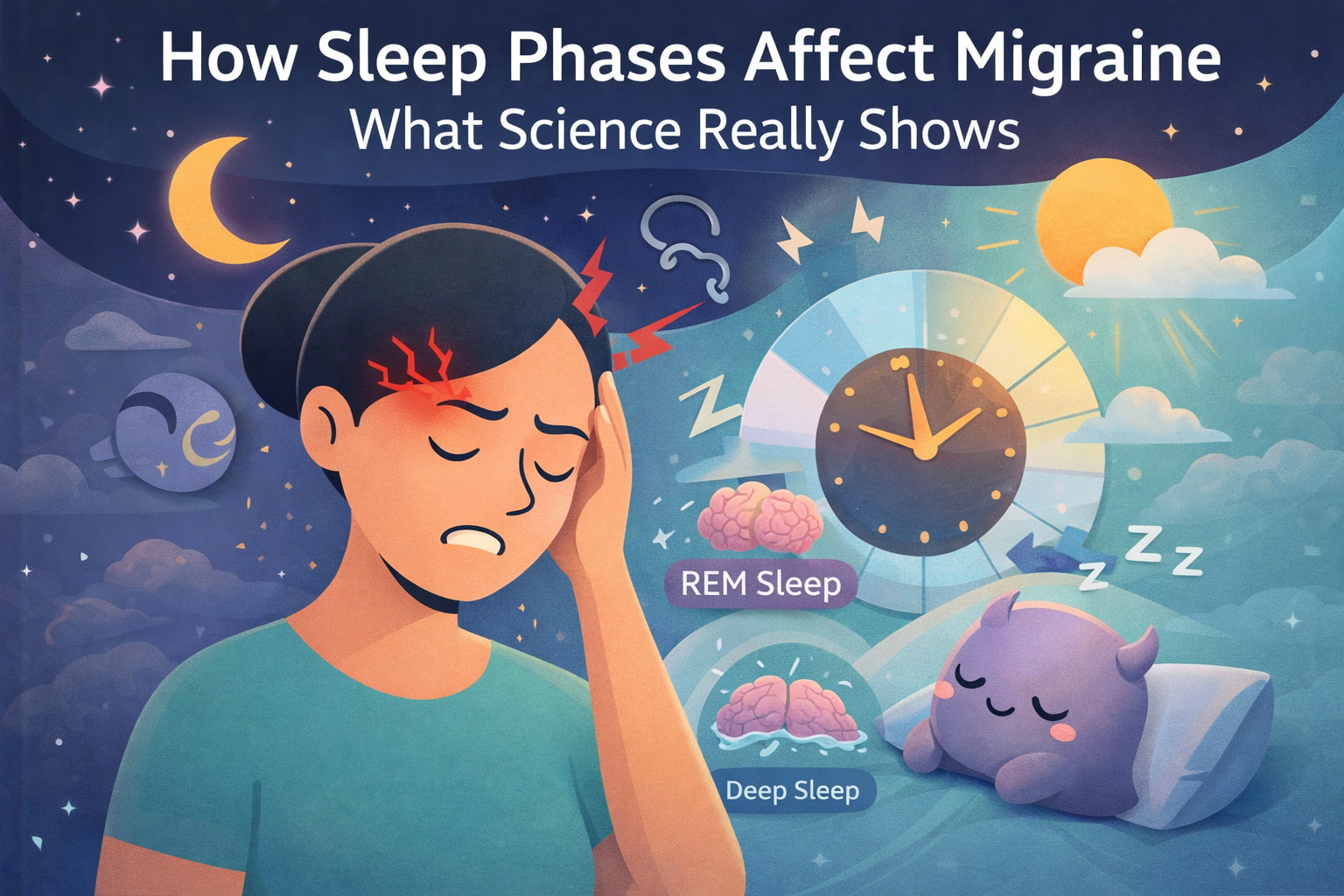
Sleep and migraine are tightly connected. Most people living with migraine notice this intuitively long before they read any research. A bad night often turns into a bad day, and a disrupted sleep schedule can quietly build toward an attack. What science has been trying to understand for decades is why this happens and which parts of sleep matter most for the migraine brain.
Research now suggests that migraine is not simply triggered by “too little sleep”. Instead, it is the structure and stability of sleep – the way we move through different sleep phases – that plays a decisive role.
Why the Migraine Brain Is Sensitive to Sleep
Migraine is a neurological condition characterized by heightened sensory sensitivity and altered pain processing. The migraine brain reacts more strongly to internal changes, including fluctuations in neurotransmitters, hormones, and autonomic nervous system activity. Sleep directly influences all of these systems.
During a normal night, the brain cycles through different stages of sleep approximately every 90 minutes. These cycles include light sleep, deep sleep, and REM sleep. In people with migraine, disruptions in this natural rhythm appear to lower the brain’s threshold for triggering an attack.
This is why both sleep deprivation and oversleeping can provoke migraine – they disturb the same fragile balance.
REM Sleep and Migraine – A Fragile Relationship
REM sleep, the phase associated with vivid dreaming, plays a critical role in emotional regulation and neurotransmitter balance. Studies show that disruptions in REM sleep are closely linked to migraine attacks.
Headaches frequently occur during REM sleep or shortly after waking, which helps explain why many people experience migraine early in the morning. REM sleep is strongly associated with fluctuations in serotonin and dopamine – neurotransmitters that are deeply involved in migraine mechanisms.
When REM sleep is fragmented or shortened, the migraine brain may struggle to regulate sensory input and pain processing. Over time, this can increase attack frequency and lower tolerance to other triggers such as stress or light.
Deep Sleep – The Missing Recovery Phase
Deep sleep is the most restorative stage of sleep. This is when the brain clears metabolic waste, stabilizes neural networks, and restores energy balance. For people with migraine, insufficient deep sleep appears to be one of the most underestimated triggers.
Without adequate deep sleep, the nervous system remains in a state of partial arousal. Neuroinflammation may increase, and pain modulation pathways become less effective. This creates a biological environment where even small stressors can provoke a migraine attack.
Importantly, spending more time in bed does not guarantee more deep sleep. Poor sleep quality, alcohol, late-night screen exposure, and irregular schedules can all reduce deep sleep even if total sleep time seems sufficient.
Fragmented Sleep and Micro-Arousals
Fragmented sleep – frequent awakenings, restless tossing, or shallow sleep cycles – is particularly problematic for migraine. Even if total sleep duration looks normal on paper, repeated micro-arousals prevent the brain from completing healthy sleep cycles.
This type of sleep fragmentation keeps the nervous system in a semi-alert state throughout the night. For a migraine-prone brain, this constant instability can significantly increase attack risk the following day.
Many people with migraine underestimate this factor because they may not fully wake up during the night, yet still experience unrefreshing sleep and morning headaches.
Circadian Rhythm Disruption as a Trigger
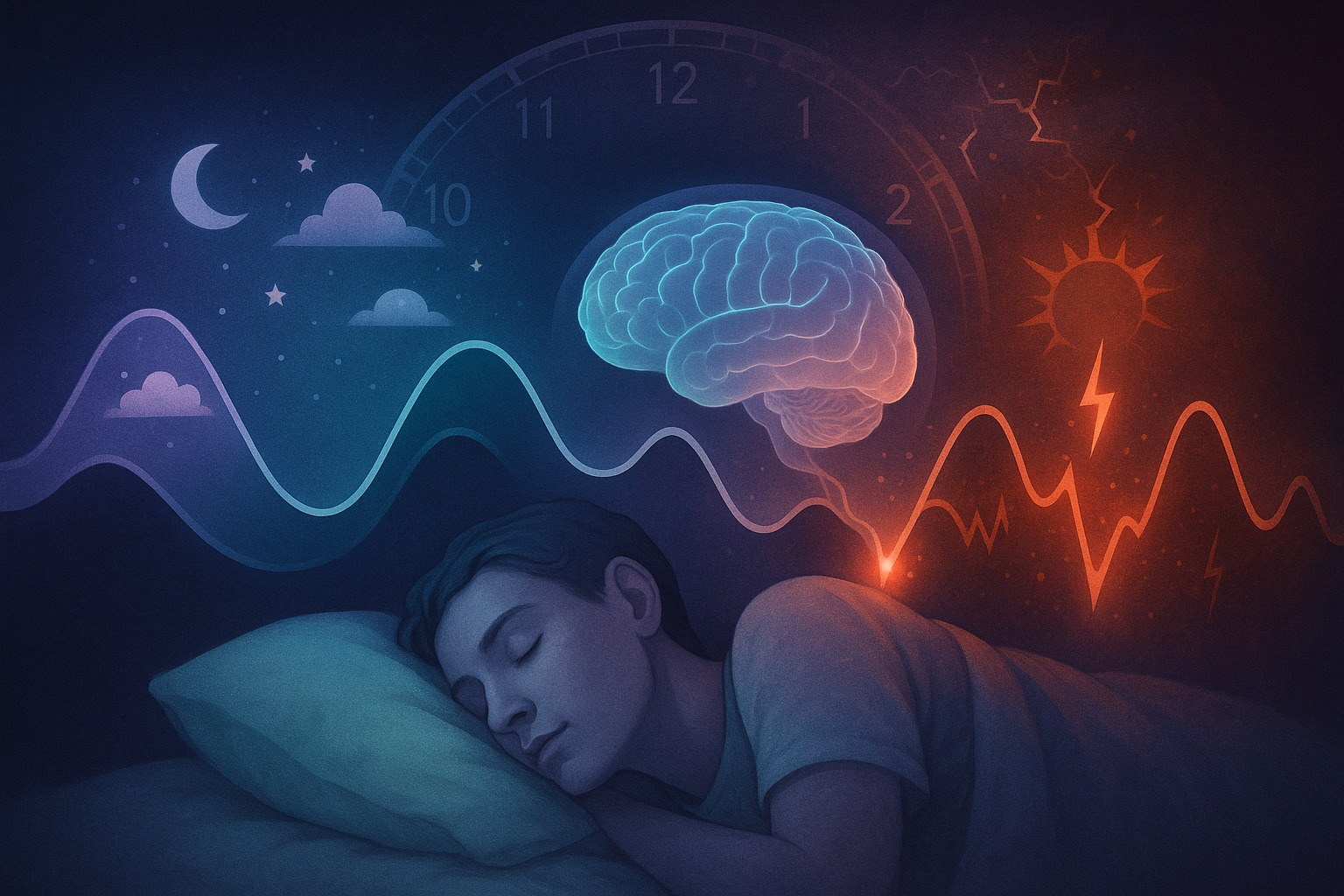
Migraine is strongly influenced by circadian rhythms – the internal biological clock that regulates sleep, hormones, and energy levels. Shift work, jet lag, late weekends, or irregular sleep times all disrupt this system.
When circadian rhythms fall out of sync, the hypothalamus – a key brain region involved in migraine – becomes more reactive. This explains why even positive disruptions, such as sleeping in on weekends, can sometimes trigger migraine.
Consistency, rather than perfection, appears to be the most protective factor.
Using Data to Understand Your Sleep-Migraine Pattern
One of the challenges in managing migraine is that sleep triggers are highly individual. Some people are more sensitive to REM disruption, others to short sleep, and others to schedule changes.
This is where structured tracking becomes valuable. Tools like the Hope & Mo Migraine Tracker are designed to help users observe how sleep duration, sleep timing, and sleep quality relate to their personal migraine patterns over time. Instead of relying on guesswork, patterns become visible, making prevention strategies more precise.
You can explore how sleep tracking and migraine insights work together at
👉 https://hopeandmo.com
Why Balance Matters More Than Rules
There is no universal “perfect sleep formula” for migraine. What science consistently shows is that stability and balance matter more than extremes. Both too little and too much sleep can push the migraine brain toward an attack if they disrupt normal sleep architecture.
Rather than chasing ideal sleep hours, migraine management benefits more from regular timing, protected sleep quality, and early awareness of subtle changes in sleep patterns.
Summary – Key Takeaways About Sleep and Migraine
Sleep affects migraine not just through duration, but through how well the brain moves through its sleep phases. REM sleep disruptions, insufficient deep sleep, fragmented nights, and circadian rhythm instability all lower the migraine threshold. Consistent, high-quality sleep supports neurological resilience and reduces attack risk.
Understanding your own sleep-migraine relationship is a powerful step toward prevention. When sleep patterns are tracked alongside symptoms, triggers become clearer and management becomes proactive rather than reactive.
In migraine care, sleep is not a luxury. It is a neurological foundation.
Sources
-
National Institutes of Health (nih.gov)
-
The Migraine Trust (migrainetrust.org)
-
ScienceDaily (sciencedaily.com)
-
US Pharmacist (uspharmacist.com)
-
Help Cure Headaches (help-cureheadaches.org)